


Hi Everyone. Please consider becoming a paid subscriber if you like my work and support what I do. Paid subscribers gain access to posts like this and others. It helps out a lot!
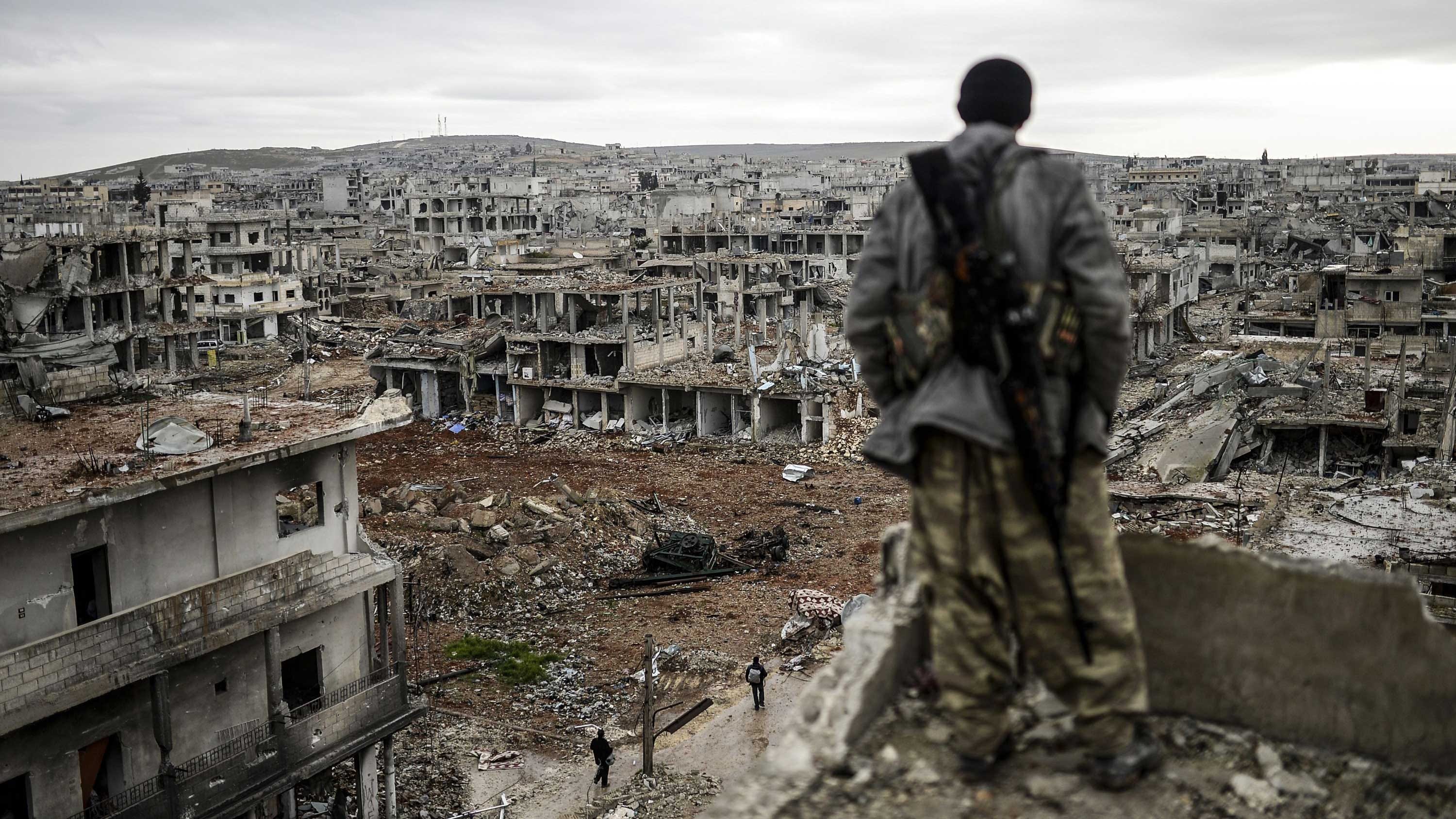
Syria’s recently reignited civil war has drawn in power from around the world that will likely make it much more complicated. Image source
On November 30, Syrian rebel forces retook Aleppo, the country's second-largest city with a population of over two million, for the first time in eight years. This development came shortly after the announcement of a shaky ceasefire between Israel and Hezbollah in southern Lebanon, opening up a new theatre of conflict with the potential to draw even more foreign power into the region. Here's a look at the war from the perspective of the international powers shaping it.
The lines are drawn (sort of)
Russia and Iran have been backing the Assad regime since Syria's civil war began in 2011. The Iranian Revolutionary Guard (IRGC), combined with Russian air and ground forces and troops from Iran-backed Hezbollah and Iraqi militias, have proven essential in Assad's fight against various rebel forces, including those aligned with the Islamic State Iraq and Syria (ISIS). Iran and Russia’s efforts to support Assad resulted in a stalemate that began in 2020, and although the fighting subsided, these foreign actors continued to work closely with the Assad regime. However, things have changed considerably in the past two years.
First, Russia's 'special operation' in Ukraine has lasted much longer than anyone in Moscow anticipated, limiting their ability to project power in Syria. Moreover, Israel's recent assault on southern Lebanon has significantly degraded Hezbollah, Iran's largest and most potent proxy. From Russia and Iran's perspective, this latest flare-up in Syria could not have come at a worse time. It was also bad timing for China, which sent companies and personnel at the invitation of the Assad regime to help reconstruct the country last year. Beijing is generally weary of escalations in the Middle East as China relies heavily on regional shipping lanes to meet its energy needs and fulfil global export orders.
Waning foreign support for Assad presents an opportunity for Turkiye, which has been generally quiet on Russia and Iran's regional power projections. This relative neutrality reflects factors such as Türkiye's NATO membership amid NATO's role in arming Ukraine, as well as its position as a significant oil and gas transit hub for Russia. It also reflects the government's base of popular support, as the Palestinian cause resonates powerfully within President Erogan's ruling conservative Justice and Development Party. With Iran supporting its regional proxies against Israel and Erdogan's government increasingly under fire for continuing to sell energy to Israel, a strong anti-Iranian stance could have further damaged relations between the government and its most stalwart base of support amid waning support from the general public. However, Turkiye has been expanding its influence in the Middle East for over a decade, and a weakened Iran and Russia present an opportunity it likely could not resist.
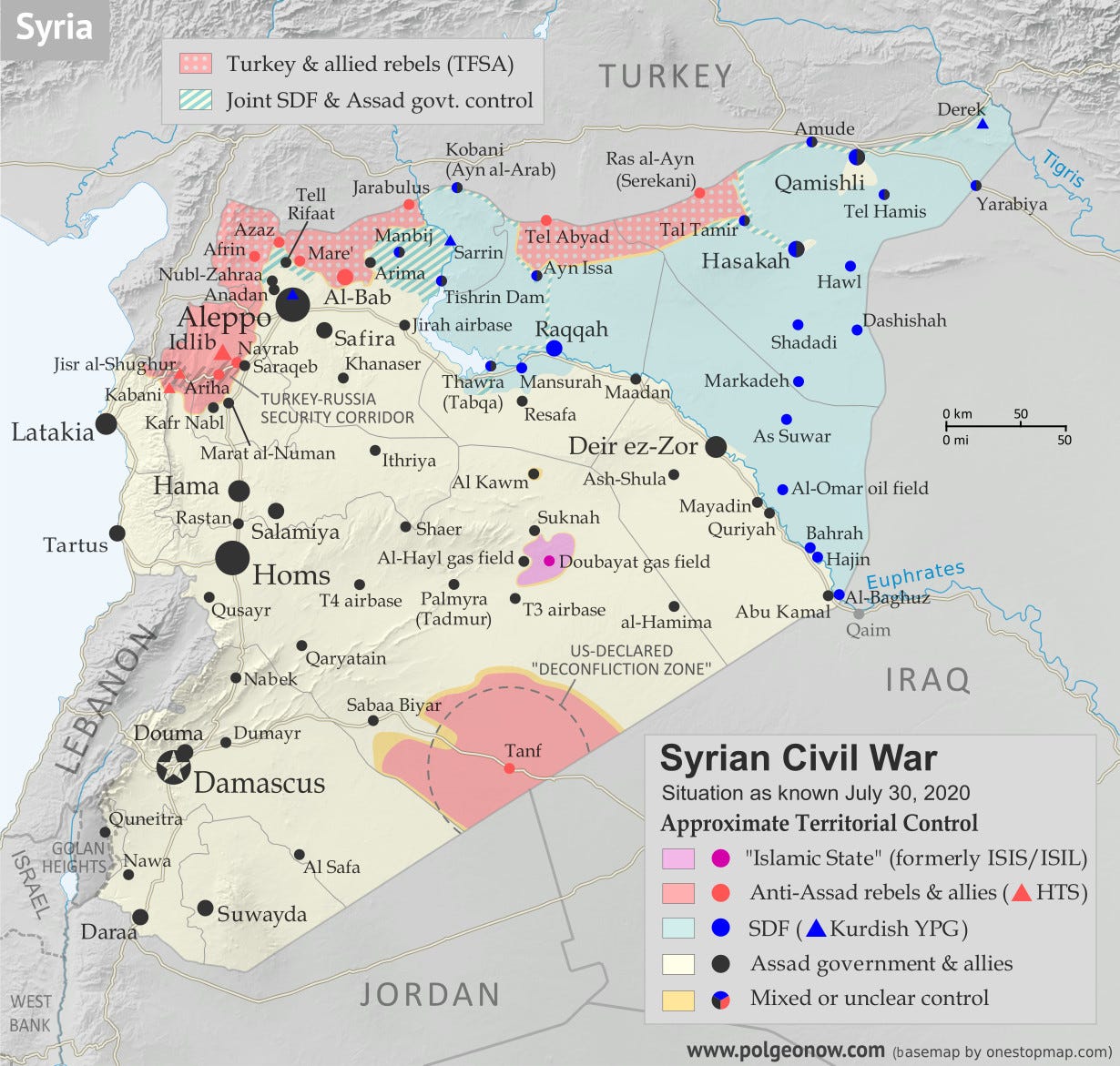
A map of Syria and the factions that controlled it in 2020. Image source
Türkiye pushes for influence
Türkiye has been cultivating power and influence in Syria since its civil war started in 2011, with Turkish troops occupying much of the country's north and Ankara providing material support to multiple Syrian resistance groups well after the 2020 stalemate. With Russia and Iran distracted for the past year, Ankara made inroads into the Assad regime this August by attempting to restore diplomatic relations between the two countries. However, Assad's unwillingness to proceed left Ankara with few options to expand its influence in Syria diplomatically, the primary issue being that the Syrian regime refused to accept the return of the nearly 4 million Syrian refugees currently living in Türkiye. Moreover, Assad’s latest push against rebel forces threatened to drive more refugees across the Turkish border. With Turkish-backed forces launching a full-on offensive on Assad, including engagement with Russian troops, one could view Ankara's recent calls for reconciliation between rebel forces and the Assad regime as a coercive negotiation tactic. Now, with Assad having fled the country and Iranian-backed militias pouring in and Russia launching airstrikes, the risk of yet another bloody, long-term proxy war looms large over Syria.
Türkiye’s influence over the rebel groups is not entirely clear cut. While it enjoys close relations with and extensively arms the Syria National Army (SNA), its relationship with Hayat Tahrir al-Sham (HTS) is more complicated. HTS is an offshoot of al-Qaeda and although Türkiye currently supports its offensive, it has had contentious relations with the group in the past. Moreover, HTS operates with a high degree of independence, recently reaching out diplomatically to Assad allies Russia and China for support (it was rebuffed). Finally, HTS is a highly factional organization and fissures within it could emerge over time. It remains to be see whether this conflict will draw Ankara and HTS closer together, or create points of contention that could further complicate the war.
Heightened tensions in US-Turkish Relations
US-backed Kurdish rebels have also recently seized territory in Syria. Washington's support for Kurdish resistance groups since the 1991 Gulf War is a significant point of contention between it and Ankara. During the Clinton administration, Washington avoided this issue by supporting Kurdish forces in Iraq while knowingly arming Turkiye with weapons it used against Kurds within its borders. However, with Washington now more involved in the region due to its support for Syrian as well as Iraqi Kurds, the stakes are higher.
Kurds are the world's largest stateless ethnicity - a victim of the poorly conceived 1916 Sykes-Picot Agreement. Now, American support for Kurdish groups in Syria and northern Iraq runs counter to Turkiye's decades of conflict with Kurdish resistance movements in its southeast. In October, the Turkish Airforce launched strikes against Kurdish targets in Syria and Iraq in retaliation for a previous attack on a Turkish state-run defence contractor. Although Washington and Ankara remain NATO partners, this issue could strain their relations, potentially pushing the incoming Trump administration into a more nuanced stance on the broader Syrian conflict.
Turkiye's push to exert influence in a united Syria governed by a friendly regime stands in contrast to the hard-won gains of Syria's Kurdish resistance since the start of the civil war. Whether the Trump administration continues to support the Kurdish cause or abandons it in favor of its relations with Ankara is anyone's guess. However, Turkiye will likely take issue with any talk of Kurdish autonomy in a future united Syria due to the threat Kurdish self determination poses to its territories. This could put the interests of Washington and Ankara at odds for some time. Whatever happens, Washington will have to make tough decisions that will define its relations between Ankara and the Kurds moving forward.
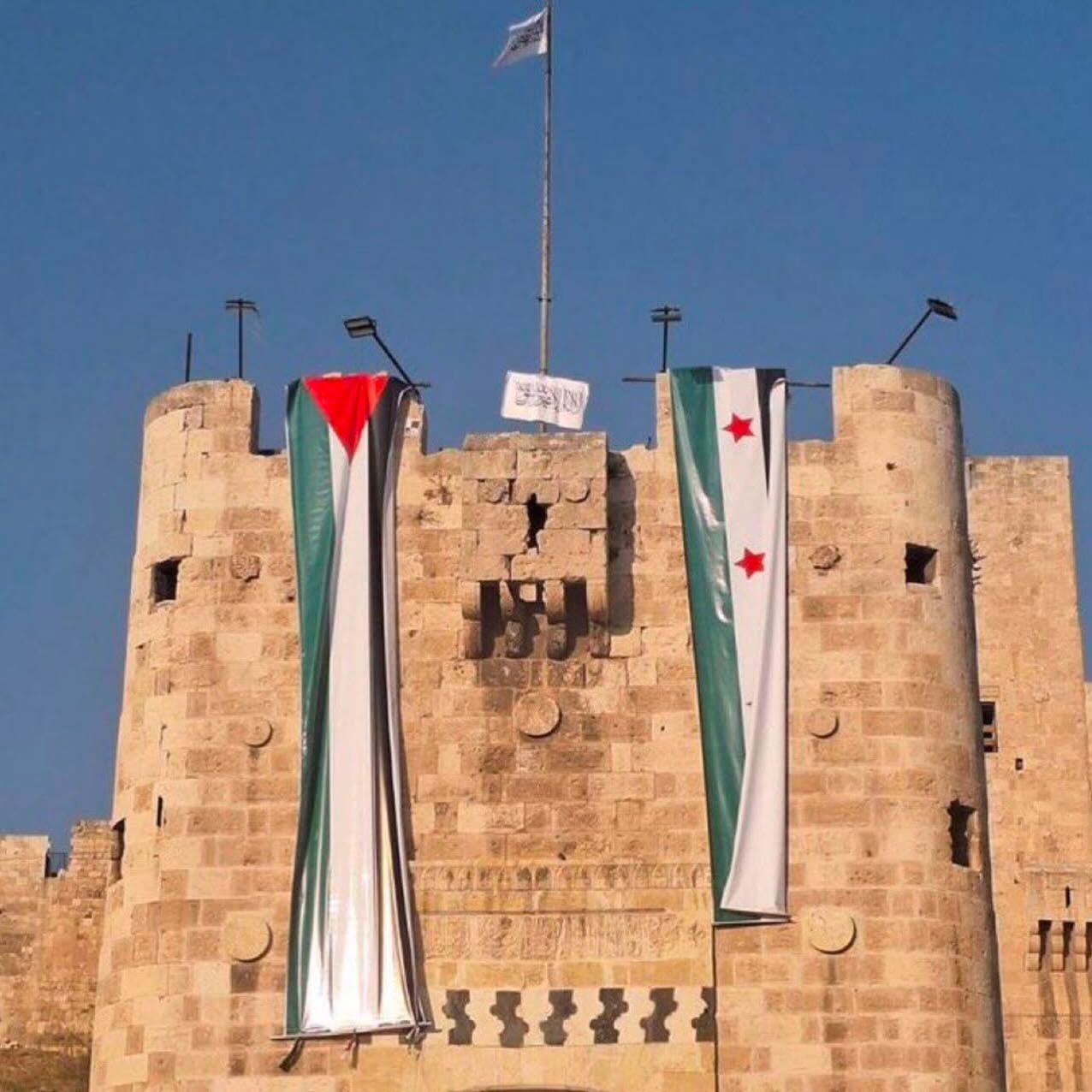
Syrian rebel forces recently flew the Palestinian flag next to their own in Aleppo. Image source
Turkey plays both sides; Iran is in a corner; and other things to consider…
For now, the rebels and possibly Türkiye are playing both sides vis-a-vis Washington and the West. With rebel forces recently calling for locals to respect the rights of Christians and other ethnic and religious minorities in northern Syria, they are signalling that their cause is sympathetic to Western values over the Jihadist leanings of many of their constituent groups. Meanwhile, the rebels' recent flying of the Palestinian flag over Aleppo sends a signal to the people of the region, who increasingly support Palestinian armed resistance, to not associate their cause with that of Israel or its Western backers. With Türkiye extensively arming Syrian resistance groups, such political signallings could underpin sentiments impressed upon them by Ankara
Iran's position in the Middle East is under threat from both Israel's war on Hezbollah and a resurgent civil war that has put their ally Assad in a vulnerable position. However, Tehran is highly adept at co-opting resistance movements from across the region and arming them with cheap and effective weapons. While Iran has primarily recruited proxies based on their religious affiliation to date, under further pressure, it might extend this to ethnicity as well. The Kurds are also Iranian people, and like the Tajiks and Pashtun of Central Asia, they are cousins of Iran's dominant Persian ethnicity. If Iran began supporting Kurdish resistance groups based on ethnic lines the way the Turks do in the South Caucasus, things could get much uglier between them moving forward. Meanwhile, Israel is taking time to replenish its munitions stocks amid a loosely upheld ceasefire in Lebanon, increasingly the likelihood of an expanded war on that front.
What all this will add up to is anyone's guess, but it will undoubtedly be interesting.
Also, I've heard Preston say "the enemy of my enemy is sometimes my enemy". That's not complicated enough for Syria. Maybe it's "the enemy of my enemies enemy, is sometimes my friends enemies friend"
I've loosely followed the Syrian Civil War over the years, and it just gets more and more complicated. Hopefully the Syrian people can find some peace and stability in the near future. Thanks for your continued work