


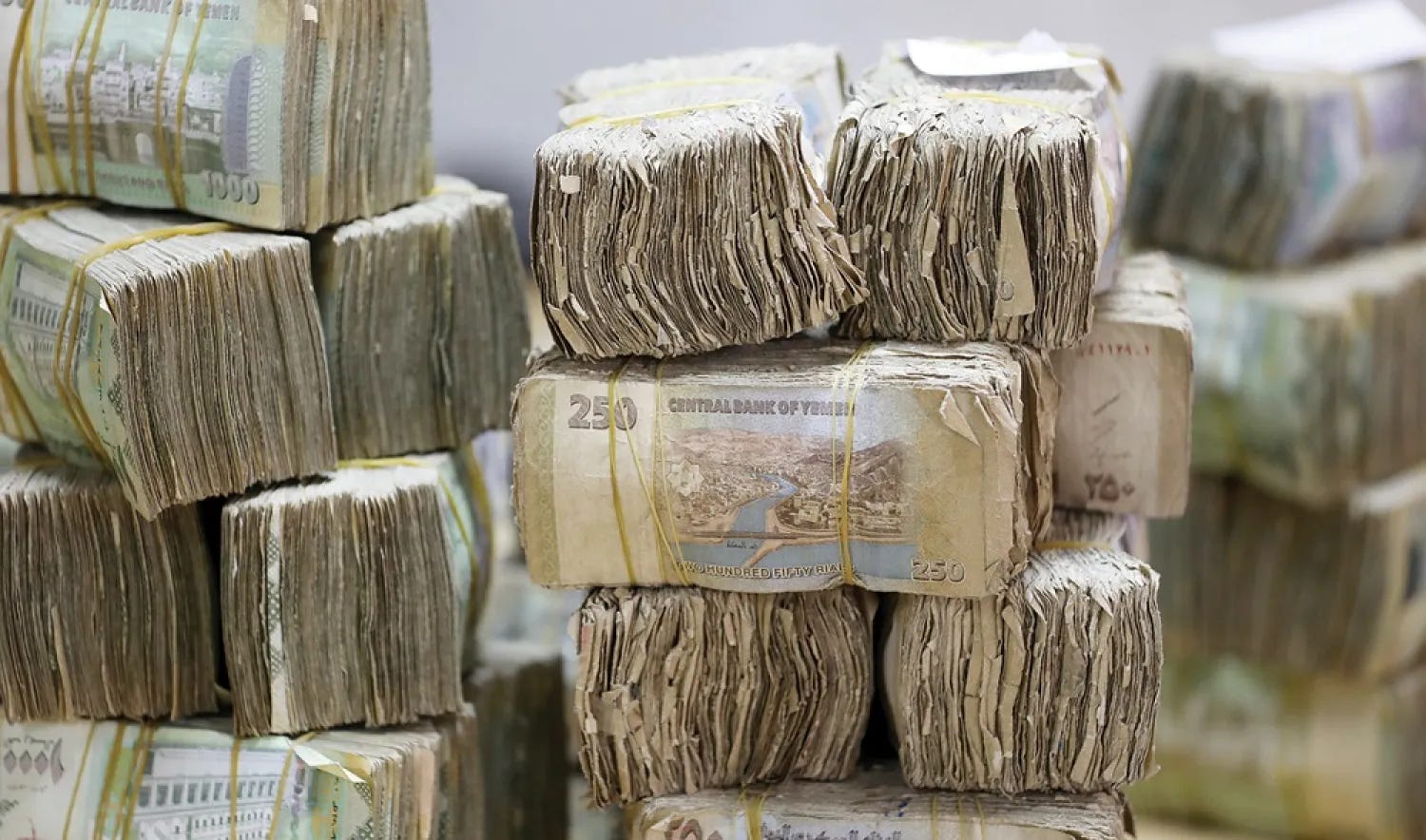
Yemeni Rial banknotes in Houthi-controlled territories are literally rotting away amid a multifaceted and worsening currency crisis. That doesn’t mean the group is going away anytime soon. Image Source
In the spring of 2025, I published an article through the Global Network on Extremism and Technology (GNET) examining the finances of Yemen’s Ansar Allah, better known as the Houthis. At the time, the group had already disrupted the movement of an estimated US$1 trillion worth of maritime cargo. Understanding how it financed and sustained those operations seemed essential.
The article attracted little attention for nearly a year and a half. Then, over the past few weeks, journalists from Reuters, Fox News, and the Saudi-based English-language daily Arab News began reaching out about a piece I had nearly forgotten.
The underlying analysis still holds up. The circumstances surrounding it, however, have changed considerably. First and foremost, the stakes are much higher. When I wrote the article, I assumed a trillion-dollar disruption to maritime trade would command sustained attention from the media and policymakers. That proved optimistic.
Now, amid a full-scale war with Iran, the crisis has widened into direct attacks across the Gulf. Houthi strikes on Saudi airports in October killed 22 people and injured hundreds more. The threat of further attacks on Saudi energy infrastructure helped push Brent crude up six dollars a barrel to US$114 on October 19. Combined with Iranian and Houthi action closing the Strait of Hormuz and Bab el-Mandeb, respectively, this escalation poses a serious threat to the global economy, especially amid an unfolding crisis in bond markets. With attacks coming from both sides of the Arabian Peninsula, Gulf states face mounting threats to critical infrastructure in one of the world’s most important energy-producing regions.
The Houthis have also expanded their territorial control within Yemen. Their capture of the strategically important port of Mokha from Gulf-backed Yemeni government forces in September strengthened their position along Bab el-Mandeb, giving them additional leverage over one of the world’s most consequential shipping routes. While Yemeni government forces have launched counterstrikes, I remain skeptical of claims that they have recaptured the port.
These gains have surprised analysts who expected the Houthis to buckle under military pressure. Long before this latest escalation, a London-based analyst told me he fully expected airstrikes—and perhaps ground forces—to dislodge the Houthis during 2025. I politely disagreed. His confidence reflected a broader tendency to underestimate the resources and organizational capacity behind the group’s resilience.
How has a movement based in one of the world’s poorest countries sustained operations with such far-reaching consequences? Its weapons, ideology, and messaging offer only part of the answer. Understanding the Houthis’ position requires examining the financial and logistical networks that allow them to source foreign currency, acquire supplies, maintain their forces, and absorb repeated military blows.
That was the focus of my original article, and it is why I am returning to the subject now. In Part I of this two-part series, I examine the operational core sustaining Houthi rule and military activity inside Yemen. The central question is how a deteriorating domestic economy can continue to support an entrenched and militarily capable movement—and why doing so requires international networks extending far beyond its territory.
